Stop “Just Checking In.” Start Making It Easier.

We’ve all sent it.

“Just checking in on this.”
“Any updates?”
“Circling back.”

From our perspective, it feels responsible and proactive because we’re staying on top of things and holding the other person accountable.

From the other person’s perspective? It often feels like pressure with zero consideration and no help attached.

Here’s the hard truth: Most follow-up communication is focused on reducing our anxiety, not on helping them move forward.

That’s a Self-First Mindset in action. And it’s perfectly normal. When outcomes matter, of course we want certainty, we want to see movement, and we want to hear answers.

But if we want trust and cooperation – the foundations of remarkable results – we have to upgrade our approach. Instead of “checking in,” try this:

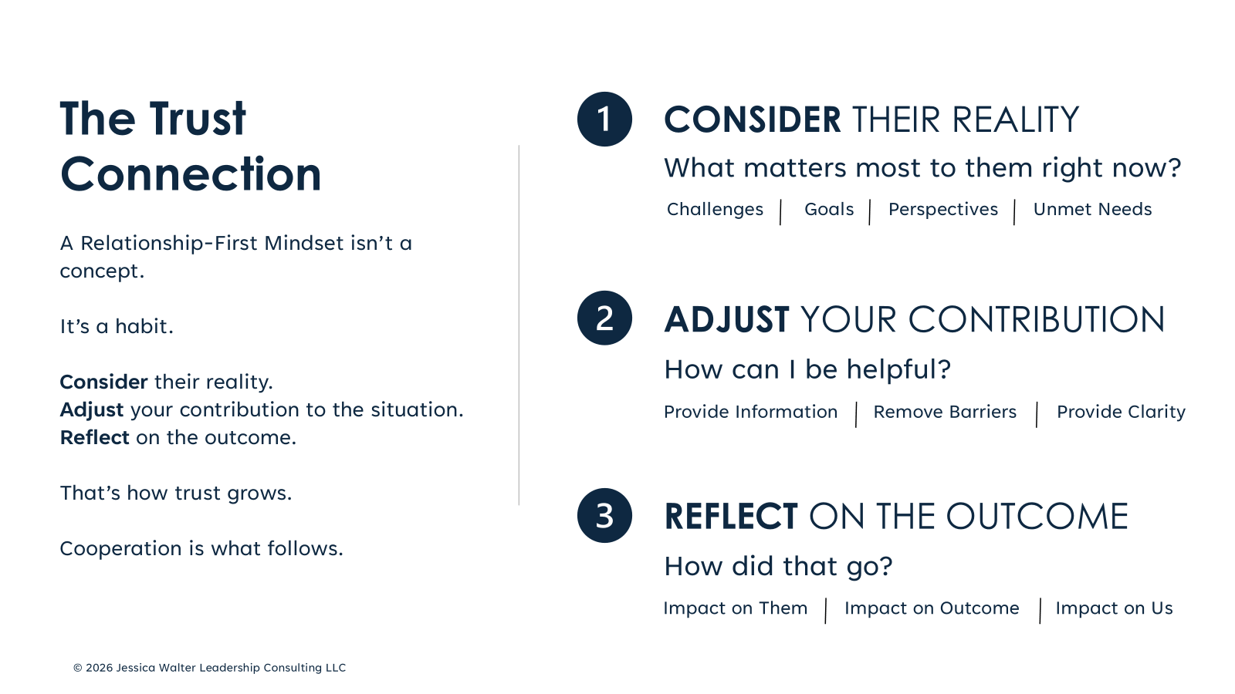
Step 1: Consider Their Reality

What might be making this hard on their end?

  • Competing priorities?
  • Missing information?
  • Fear of making the wrong call?
  • A backlog you don’t see?

Step 2: Adjust Your Contribution (to the Situation)

Then change your approach from a nudge to support.

Try:

  • “Would it help if I tracked down _______?”
  • “If timing is tight, I can reset expectations on my end if you give me the new date.”
  • “Let me know what would make this easier to move forward.”

See the difference?

One version says: “This is still on my list, and you’re in my way.”

The other says: “I’m on your side, and I want to make this easier.”

Guess which one builds trust.

Being effective at work isn’t usually about pushing other people harder – especially under modern conditions. Sometimes, it’s about removing friction the other person is quietly carrying.

That’s how cooperation gets faster – not slower.

Stop “Just Checking In.” Start Making It Easier.

We’ve all sent it.

“Just checking in on this.”
“Any updates?”
“Circling back.”

From our perspective, it feels responsible and proactive because we’re staying on top of things and holding the other person accountable.

From the other person’s perspective? It often feels like pressure with zero consideration and no help attached.

Here’s the hard truth: Most follow-up communication is focused on reducing our anxiety, not on helping them move forward.

That’s a Self-First Mindset in action. And it’s perfectly normal. When outcomes matter, of course we want certainty, we want to see movement, and we want to hear answers.

But if we want trust and cooperation – the foundations of remarkable results – we have to upgrade our approach. Instead of “checking in,” try this:

Step 1: Consider Their Reality

What might be making this hard on their end?

  • Competing priorities?
  • Missing information?
  • Fear of making the wrong call?
  • A backlog you don’t see?

Step 2: Adjust Your Contribution (to the Situation)

Then change your approach from a nudge to support.

Try:

  • “Would it help if I tracked down _______?”
  • “If timing is tight, I can reset expectations on my end if you give me the new date.”
  • “Let me know what would make this easier to move forward.”

See the difference?

One version says: “This is still on my list, and you’re in my way.”

The other says: “I’m on your side, and I want to make this easier.”

Guess which one builds trust.

Being effective at work isn’t usually about pushing other people harder – especially under modern conditions. Sometimes, it’s about removing friction the other person is quietly carrying.

That’s how cooperation gets faster – not slower.

Published by Jessica Walter

Culture and Organizational Development https://www.linkedin.com/in/jessicawalterapr