
Most leaders think trust is about reliability. “I do what I say I’m going to do. I meet deadlines. I’m accountable. I have integrity.”
These are all good things – necessary behaviors for any effective leader – but not the full picture.
Here’s the part we don’t talk about enough: trust is more than just integrity, follow-through, and being dependable.
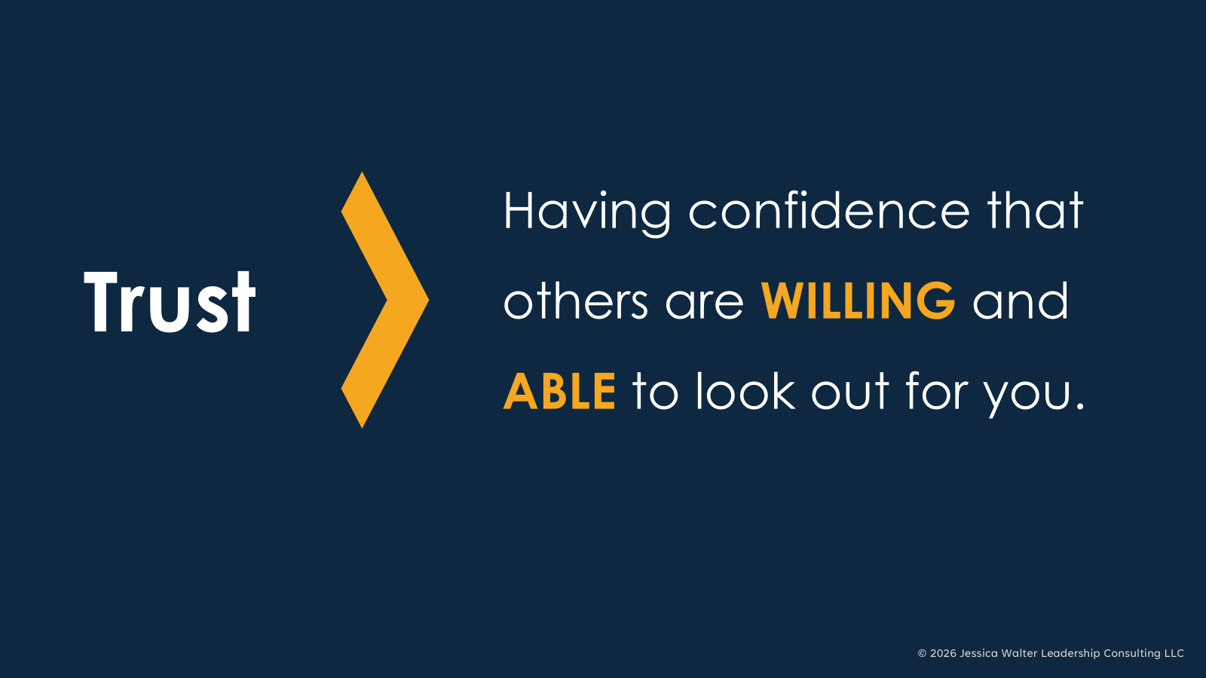
At work, trust is defined by the other person’s level of confidence that you’re willing and able to look out for them.
Trust grows when people see that you’re consistently considering their goals, perspectives, challenges, and unmet needs.
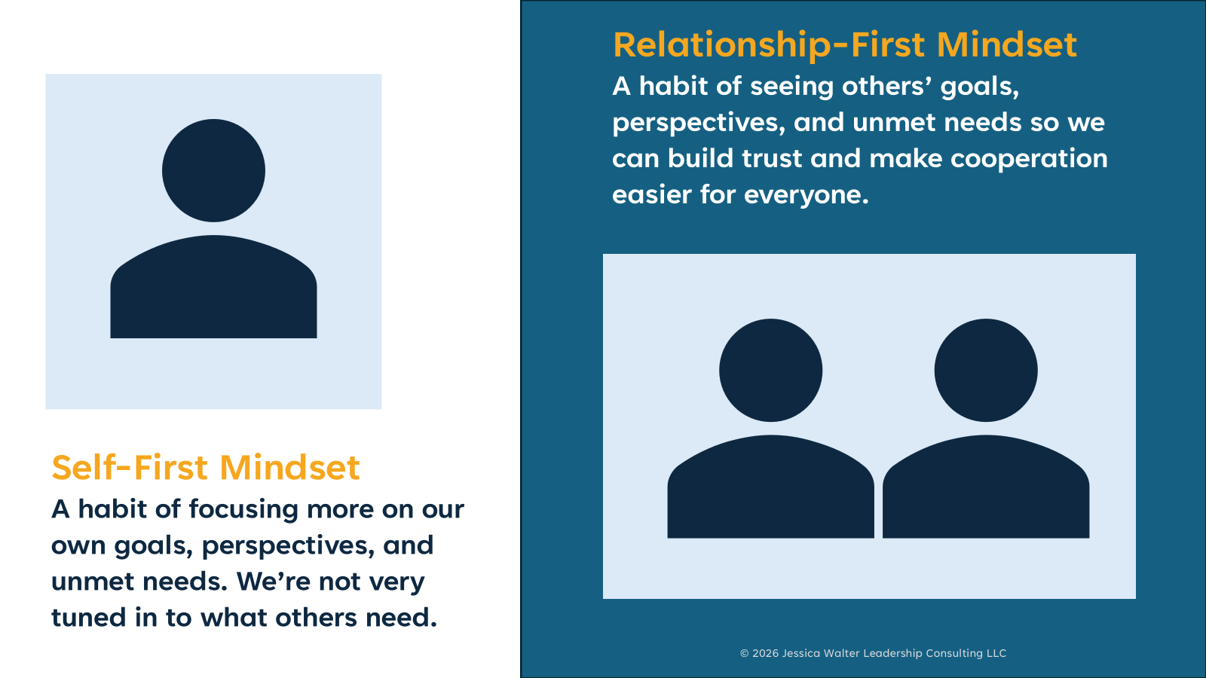
But many of us have developed a habit of focusing primarily on our own needs. This is where breakdowns happen.
Especially when pressure rises, most of us shift into a Self-First Mindset:
- We focus on our deadlines
- Our stress
- Our priorities
- Our need to look competent
- What others should be doing for us
It’s not because we’re selfish. It’s biology. When we feel overloaded or under threat (even socially), our nervous system narrows our focus to self-protection. Plus, many of us have grown up around people and institutions that encouraged us to have a competitive, me-first, win-lose approach.
The problem? Cooperation requires the opposite.
It requires a Relationship-First Mindset — the habit of considering other people’s goals, pressures, perspectives, and unmet needs in addition to your own. This is the key to stronger relationships and smoother collaboration.
Here’s a simple shift you can try today:
Before your next interaction (meeting, email, etc.) with someone you typically feel friction with, pause and ask yourself:
“What matters most to them right now?”
That one question does two powerful things:
- It softens your frustration. If you felt anticipatory defensiveness, the simple decision to consider what the other person is dealing with or trying to accomplish can be enough to soften the fear or anger that may be building inside.
- It helps you communicate in a way they’re more likely to receive. This question puts you in a mindset where you’re likely to be warmer, friendly, and personable – and these are all cues that signal they can trust you (instead of preparing to defend themselves against you).
This is how trust grows – when the other person feels seen, understood, and supported.
And the great thing about trust is that it’s often reciprocated. Perhaps not right away, but if we want to see cooperation from others, consistently demonstrating that we can be trusted to look out for them is the key.
 leadingperspectives.org